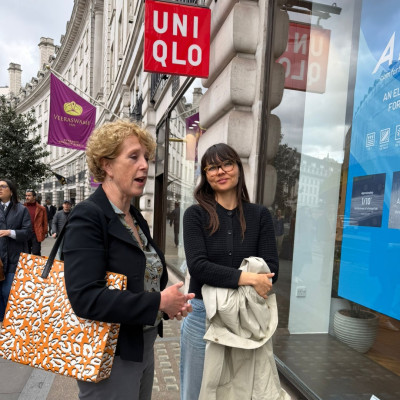
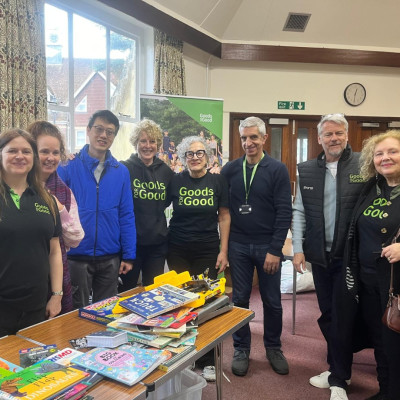
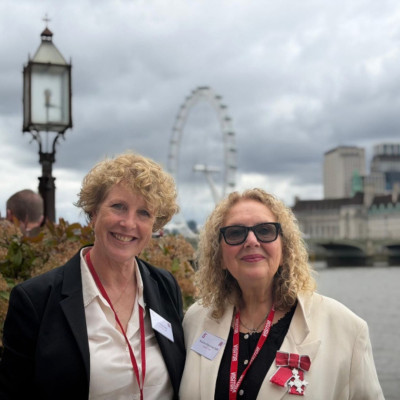
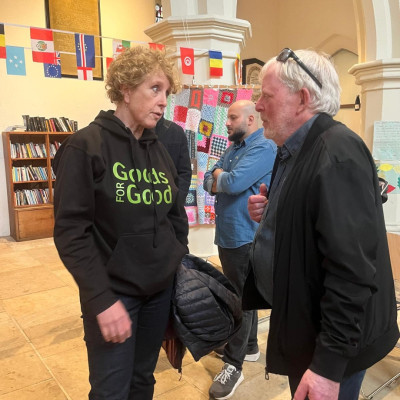
Over the past few weeks, I’ve had the opportunity to spend time with the people, partners and communities behind Goods For Good.
I’ve visited organisations supporting families across the UK. I’ve met businesses thinking differently about surplus, sustainability and social responsibility. I’ve spent time with our team, trustees, ambassadors and logistics partners, seeing first-hand the scale of collaboration required to move good products quickly and efficiently to people who need them.
And one thing has become very clear to me — what Goods For Good has built over the past decade has never been more relevant. Not only because the need for support remains significant across many communities in the UK and internationally, but because the conversation around waste, sustainability and surplus is changing rapidly too.
Across Europe, governments and businesses are increasingly recognising that perfectly usable products should not be destroyed or sent to landfill when they still have value and purpose. At the same time, charities and community organisations continue to face growing demand for practical support.
Goods For Good sits directly at the intersection of those two realities. That is what makes this organisation so powerful.
More than redistribution
Before joining Goods For Good as CEO, I already knew the organisation through my role as a trustee. But spending my first month immersed in the day-to-day operation has given me an even deeper appreciation for what makes this model so effective.
This is not simply about moving surplus stock from one place to another. It is about building trusted partnerships between businesses, logistics providers, community organisations and humanitarian networks. It is about responding quickly when charities, schools, family support services and community groups and frontline services need help. It is about ensuring that high-quality goods — clothing, footwear, toiletries, bedding, school items and other essentials — reach people with dignity. And most importantly, it is about doing all of this in a way that is operationally credible, environmentally responsible and scalable. That combination matters.
Too often, sustainability and social impact are discussed separately. What inspires me about Goods For Good is that the organisation demonstrates, every single day, that these things are deeply connected. Reducing waste and supporting people are not competing priorities. They are part of the same solution.
A renewed belief in people
One of the things that has struck me most during my first month is the number of people quietly doing extraordinary things to support others. At a time when public discourse can often feel fractured or pessimistic, spending time with our partners and supporters has been a genuine reminder of the strength that still exists within communities.
I’ve met people who saw a need locally and simply stepped forward to help. Community leaders who started small initiatives during Covid and never stopped. Businesses choosing to think differently about what happens to surplus stock. Logistics and warehousing partners donating time, expertise and operational support to help essential goods reach people faster. There is a huge amount of practical compassion behind this work. It’s about real people taking practical action, and that has been one of the most inspiring parts of stepping into this role.
Looking ahead
As I look ahead to the coming months, I believe there is a huge opportunity for Goods For Good to continue strengthening the role it plays within both the humanitarian and sustainability sectors. The need for practical support is not going away. Nor is the urgent need for more responsible approaches to waste and surplus. Businesses are increasingly being asked difficult questions about sustainability, environmental responsibility and the lifecycle of products. At the same time, communities across the UK and internationally continue to need practical support delivered quickly, efficiently and with dignity.
Goods For Good already provides a proven model that addresses both. The challenge now is scale. Not simply scaling the volume of goods redistributed, but scaling the partnerships, infrastructure and funding required to move those goods quickly and effectively.
That challenge is becoming even more important as the cost of moving goods continues to rise. While more businesses are recognising the value of redistributing surplus rather than wasting it, getting those goods to the right places still requires investment in sortation, warehousing, customs and transport. Increasingly, the opportunity isn’t simply donating more stock. It’s thinking more holistically about how we enable those goods to reach communities quickly, efficiently and at scale.
That means continuing to work closely with brands, retailers, logistics providers, community organisations and supporters who understand that good products should never become waste when they still have the power to help people.It also means continuing to build awareness of what organisations like Goods For Good can achieve when operational expertise, sustainability and humanitarian action come together
An exciting chapter ahead
I feel incredibly fortunate to be joining Goods For Good at this point in its journey. The organisation has strong foundations, trusted partnerships and an extraordinary network of people behind it.
Over the coming months, I’m looking forward to meeting more of the people and organisations who make this work possible, continuing to learn from our partners and exploring how we can continue to grow our impact sustainably and responsibly. We also have some exciting moments ahead, including our World Cup Packathon in June, our 12th anniversary celebrations in July and Paddle For Good later this summer.
Most importantly, I’m excited about the conversations still to come. Because increasingly, I believe Goods For Good is part of a much bigger conversation about how we build a more responsible, sustainable and connected society. And that conversation is only just beginning.
If you’d like to follow more of what we’re seeing, learning and working on over the coming months, we share regular updates through our quarterly newsletter, including reflections from me and stories from across the organisation. Our next newsletter will be landing at the end of June and I’d love for you to receive it.
Keep in touch
Join our community and receive news and updates from the Goods For Good headquarters.